Do not buy the backlink. Build something Ireland needs.
Any firm can pay for a placement. The real opportunity is to create a useful local resource that earns citations, helps the public and becomes part of your firm's reputation.
A paid link is rented. A useful asset is owned.
A bought link may appear in a report next month, but the solicitor has created nothing a client, journalist or community group would miss. A linkable asset leaves the firm with research, a tool, a recognised subject and a reason for people to return.
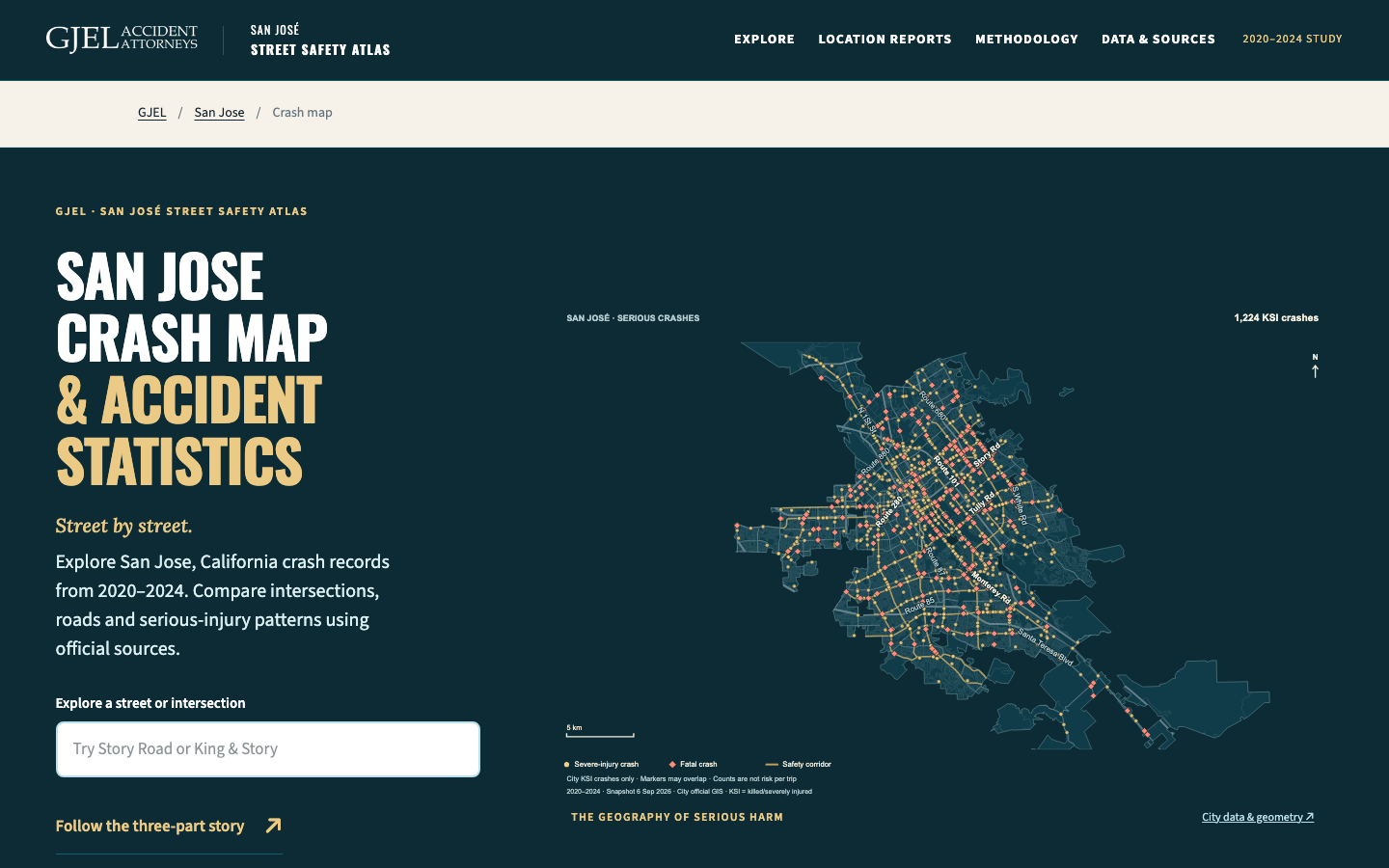
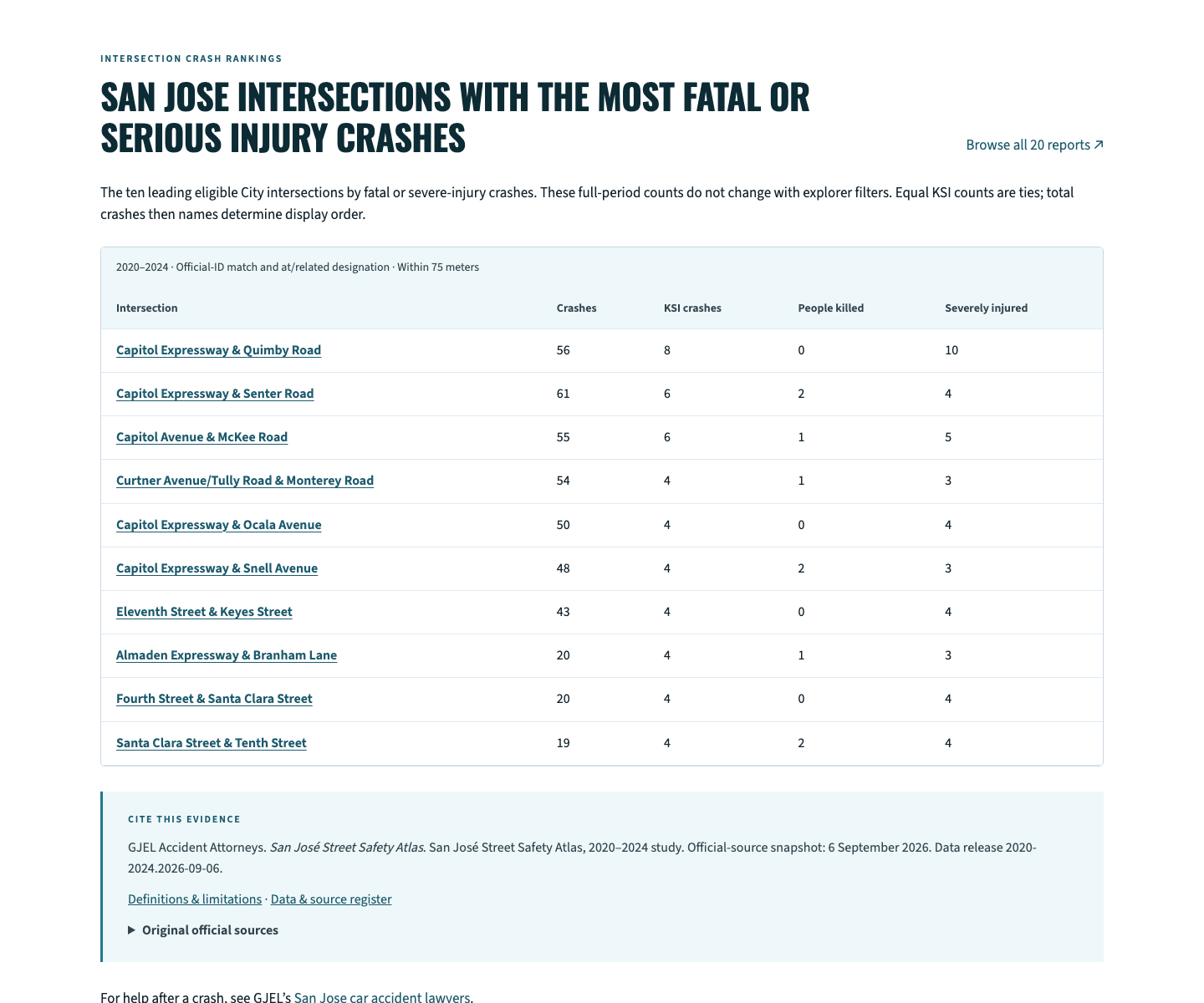
GJEL Accident Attorneys' San Jose Crash Map shows the difference. The firm organised official collision records into an interactive explorer, 20 location reports, ranked intersections, downloadable evidence, sources, limitations and press-reuse material.
The work is valuable before anyone links to it. That is why somebody has a reason to cite it.
Would a reporter, librarian, residents association or another solicitor use this resource if Google rankings did not exist? If yes, you may have an asset. If no, it is probably just another campaign.
Eight original assets for an Irish solicitor
Choose one narrow problem, one jurisdiction and information your firm is credible enough to maintain.
1. The courthouse first-visit guide
Verify entrances, security, parking, public transport, accessibility, interpreters, filing locations and official contacts. Date every check and link to the Courts Service.
2. A probate timeline explorer
Bring official steps, current published processing information, forms and common delay points into one visual guide. Separate statutory requirements from estimates.
3. A planning-decision map
Organise local authority records so residents can explore relevant decisions by place, project type or date without learning several government systems.
4. A road-safety mini-study
Analyse official collision information for one corridor or county. Explain the difference between collision frequency and risk, and publish the limitations.
5. A public-record request kit
Show people where to request Garda, court, planning or administrative records, which official forms apply and where review or appeal information lives.
6. A legal-help directory
Map clinics, Legal Aid Board centres, FLAC resources, language support and specialist services. Help people your firm cannot act for take a credible next step.
7. A commercial lease clause study
Use an anonymised, disclosed sample to examine clause length, readability or the prevalence of defined provisions. Never publish client-confidential material.
8. An annual local legal-needs survey
Ask the same clear questions each year, publish the questionnaire and sample, and give local organisations reusable charts with proper context.
Show your workings
Original research carries more responsibility than an ordinary blog post. Name the sources, access dates, definitions, inclusion rules, known gaps and the person who reviewed the work. Give the release a version date and publish a corrections route.
For legal topics, make the educational purpose clear. Avoid promises, personalised conclusions and dramatic claims the evidence cannot support. Review advertising, privacy, copyright and data-protection obligations before publication.
A useful release package
- The interactive resource or carefully structured guide
- A short findings page written for non-lawyers
- Original sources and a transparent methodology
- Downloadable tables or graphics where permitted
- Suggested citation and clear reuse terms
- A visible correction and update policy
Give the journalist the story, not a request for a favour
Instead of asking somebody to add your link, explain the finding their readers will care about. Provide the table, the definition behind the number and a direct route to the evidence. A housing journalist, local radio producer, professional body and community organisation should each receive a different, relevant note.
The link then serves the reader who wants to inspect the source. It is attribution for useful work, not a transaction hiding behind an article.
What information should your firm own?
We can help identify the local question, source the evidence and turn your firm's expertise into a useful resource with a credible release plan.
Explore content strategy